Best Child Orthopedic Surgeon in Chattogram - Book Appointment
The Knee That Aches After Every Match
He plays the full match on Saturday without a single complaint. By Sunday morning he is coming down the stairs one step at a time, hand on the railing. The pain sits at the front of his knee, just below the kneecap.
Press that spot and he winces. A small hard bump sits there too, bigger than on the other leg. Running hurts. Jumping hurts. Even kneeling for prayers has become something he avoids.
For a growing teenager who trains hard, this pattern is a familiar one. Doctors often call it Osgood-Schlatter. The name sounds serious, but the problem is usually growth, not damage.
Below the kneecap, the thigh tendon anchors into the shin bone. In a teenager, that anchor sits on bone that is still forming. Every sprint and kick pulls on the same tender spot.
Before assuming it will pass, have the knee examined once. A child orthopedic surgeon in Chattogram can check both knees and the hip, and say whether this is the growth pattern it seems to be.
45 available specialists found


Prof. Dr. Chandan Kumar Das

Dr. M. A. Fayshol

Dr. Binimoy Baran Roy

Dr. Faisal Ahmed
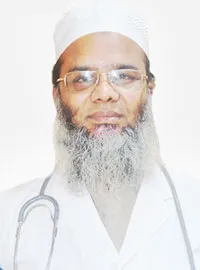
Dr. Md. Hamidul Islam

Dr. Showkat Jahan Chowdhury


Dr. Rakib Mohammad Monjur

Dr. ATM Rezaul Karim


Prof. Dr. Md. Iqbal Hossain
Why the Bump Below the Knee Gets Sore
Teenage bones are still lengthening. At the top of the shin bone sits a growth area where new bone forms. The thigh tendon pulls on that area all day long.
In a small child this bone is soft. In an adult it has hardened and closed. In between, sprinting and jumping tug at it again and again.
The result is tenderness and a slowly growing bump below the kneecap. Doctors call the pattern Osgood-Schlatter. One knee usually complains more than the other.
Why Matches Make It Worse and Rest Settles It
The pain follows the load. A hard training week stirs it up; a quiet week settles it.
Stairs, squatting and kneeling all load the tendon. Striking a ball does too.
Rest here means adjusting the load, not ending the season.
Warning Signs That Point Somewhere Else
Not all teenage knee pain fits this pattern. A knee that swells after a fall needs different attention. So does one that locks or gives way.
Fever with knee pain means same-day care. Night pain, or pain unrelated to activity, also needs prompt review.
With such signs, the doctor looks for injury or infection instead.
What the Doctor Checks
The doctor watches your child walk and squat, then presses over the bump. Both knees are compared. The hip is checked too, because hip trouble can feel like knee pain.
Tight thigh muscles increase the pull, so flexibility is tested. Training load and recent growth also come up.
If the story fits the pattern, an X-ray is not always needed.
Playing On, With Adjustments
Most teenagers manage with load changes rather than a long layoff. Lighter sessions during a flare are a common start.
The pattern fades as growth slows and the area hardens. If fever or swelling joins the pain, a child specialist in Chattogram should be involved too.
Ask your doctor whether the current training load is sensible.
Frequently Asked Questions
What is Osgood-Schlatter?
Irritation of the growth area below the kneecap, where the thigh tendon anchors. It appears in active teenagers during growth spurts.
Will it damage his knee permanently?
It usually settles once growth finishes. A visible bump often remains, which alone is not damage.
Must he stop playing football?
Usually not. Most keep playing with the load adjusted during flare-ups.
Why check the hip as well?
Hip problems can be felt in the knee. The check makes sure the real source is not missed.
When should we return sooner?
If the knee swells, locks or gives way. Fever, night pain or a worsening limp also need earlier review.
Will the bump go away?
The soreness fades as growth completes. The bump may stay into adult life, which is normal.
Sponsor Space Available
Place your banner here to reach thousands of patients daily.
Grow Your Practice
Premium placement for hospitals & doctors.