Best Cancer Specialist in Kushtia - Book Appointment
What a Cancer Specialist (Oncologist) Does
A cancer specialist, also called an oncologist, is a doctor who diagnoses cancer, plans its treatment, and guides patients through each stage of care. When cancer is suspected, the oncologist reviews the symptoms, orders the right investigations, and confirms the diagnosis — most often through imaging and a biopsy. Once cancer is confirmed, the specialist explains the type, the stage, and which treatment approaches make sense for the situation.
Oncology care involves more than prescribing medicine. The oncologist coordinates with surgeons, radiologists, and pathologists, schedules treatment in the right sequence, monitors how the patient responds, and adjusts the plan when needed. Supportive care — managing pain, nutrition, and the side effects of treatment — is part of the work throughout, not an afterthought.
If a biopsy report, scan finding, or unexplained symptom points toward cancer, consulting an oncologist early is the right step. When a specialist is not listed for the district, a medicine specialist in Kushtia can review the case and arrange a referral. You can also check the doctors in Kushtia listing to see who is currently practising in the district.
When to Consult a Cancer Specialist in Kushtia
You should consider seeing a cancer specialist when warning signs persist or when test reports raise concern. Warning signs include a lump or swelling that does not go away, a sore that fails to heal, unexplained weight loss, unusual bleeding, a persistent cough or change in voice, or ongoing pain without a clear cause. Any of these lasting more than a few weeks deserves proper evaluation.
An oncology consultation is also appropriate when a doctor has found something suspicious — a lump on examination, an abnormal scan, or an inconclusive biopsy — and wants a specialist opinion. Patients who have already started treatment should see their oncologist for scheduled follow-ups, to report side effects, and to plan the next steps. People with a strong family history of cancer can ask about screening appropriate to their age and risk.
Check the doctor listings on this page for currently listed cancer specialists in Kushtia with their chamber details. If none are listed, a medicine specialist or general surgeon is a sensible first step — they can assess the symptoms, order initial tests, and refer onward where needed, including to a tertiary centre if the case requires it.
How Cancer Care Works in Bangladesh
Cancer care in Bangladesh works in tiers. The first tier is diagnosis — clinical examination, imaging such as ultrasound or CT scan, and a biopsy or FNAC to confirm whether cancer is present and identify its type. Ask your doctor which of these steps can be done locally.
The second tier is treatment planning. The oncologist reviews the confirmed diagnosis and the stage of the disease, then recommends surgery, chemotherapy, radiotherapy, or a combination, depending on the cancer type and how far it has spread. Some treatment steps may require referral to a tertiary centre, so ask your doctor whether the proposed plan can be carried out in full at the chosen hospital.
The third tier is follow-up and supportive care. After treatment begins, the patient returns for scheduled reviews, blood tests, and scans to check the response and watch for recurrence. Pain management, nutrition support, and care for treatment side effects continue alongside. Confirm with the selected hospital whether each part of the treatment and follow-up plan is available there, or whether some visits may need to be arranged at a tertiary centre.
3 available specialists found
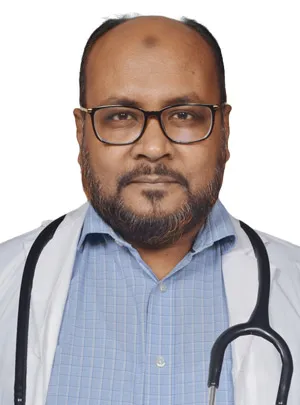
Dr. Md. Shaheen Ferdous

Asst. Prof. Dr. Md. Tousifur Rahman
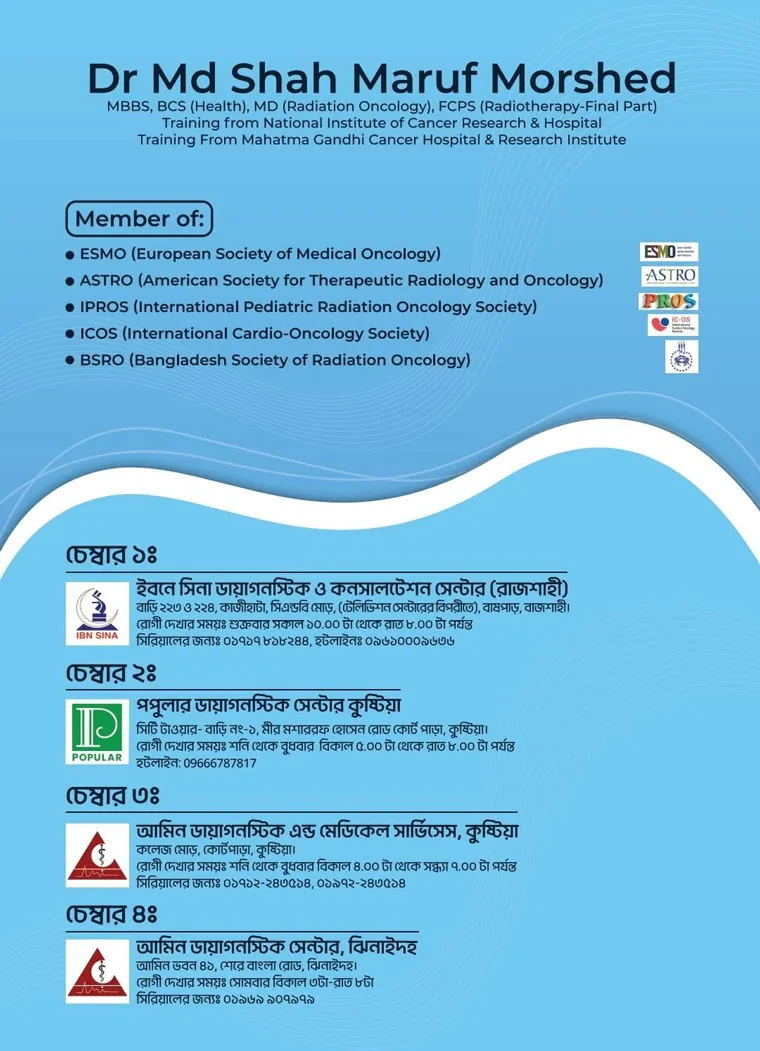
Dr. Md. Shah Maruf Morshed
Preparing for Your Visit
Gather every report related to your condition before the visit: biopsy or FNAC results, imaging scans with the films or CDs, blood test reports, previous prescriptions, and any referral note from another doctor. Arrange them in date order so the specialist can follow how the condition developed. If you had surgery, bring the operation notes and the histopathology report.
Write down your symptoms — when each began, what makes it worse, and how it has changed. Note any family history of cancer, including the relationship and the age at diagnosis. If you are already receiving treatment elsewhere, bring the complete treatment record so the oncologist can see what has been given and how you responded.
Bring a list of medicines you currently take, with their doses, and mention any allergies. Prepare your most important questions in advance, and consider bringing a family member who can listen and take notes — oncology consultations carry a lot of information, and a second person helps you remember the key points later.
Questions Worth Asking
Ask the oncologist what the diagnosis is in plain language and what stage the cancer is at. Ask what the stage means for treatment choices and what the realistic goals of treatment are. If any report is unclear, ask the doctor to explain it rather than leaving with unanswered questions.
Ask which treatment options exist for your situation, what each aims to achieve, and what side effects each commonly causes. Confirm with the selected hospital whether the proposed treatment can be delivered there or whether some steps may require referral to a tertiary centre. Clarify how long treatment is expected to take, how progress will be checked, and what symptoms should prompt an urgent visit.
Ask about cost and scheduling before treatment begins. Find out what the follow-up schedule looks like after treatment ends, and whether the plan can be adjusted if you respond well or poorly. A clear answer to each question helps you plan both medically and practically.
Common Cancers and How They Are Diagnosed
The cancers commonly seen in Bangladesh include lung cancer, breast cancer, cervical cancer, cancers of the mouth and throat, stomach cancer, and blood cancers. Each presents differently — a persistent breast lump, a non-healing mouth ulcer, abnormal bleeding, or unexplained anaemia can each be the first clue — so the specialist's examination and your specific symptoms guide the choice of tests.
Diagnosis usually starts with imaging such as ultrasound, mammogram, or CT scan to locate the abnormality. A tissue sample is then taken through biopsy or FNAC, and a pathologist examines it to confirm cancer and identify the type. Blood tests, including tumour markers where relevant, add supporting information, and further scans may check whether the disease has spread.
Staging brings these results together so the oncologist can choose the right treatment sequence. Carry originals of any reports you already have — repeat testing is sometimes avoidable, and the oncologist can judge which results are recent enough to use. Ask your doctor whether any test needs to be repeated locally or at a tertiary centre.
Treatment Approaches
Treatment depends on the cancer type, its stage, and the patient's overall health. Surgery removes the tumour when the disease is localized; chemotherapy uses medicines that travel through the body; radiotherapy targets the affected area with radiation; hormone therapy, targeted therapy, and immunotherapy apply to specific cancer types. Many patients receive a combination of these in a planned sequence.
Ask your doctor which approach is recommended for your case and why the alternatives were set aside. Confirm with the selected hospital whether it can provide each part of the proposed treatment — some steps, such as radiotherapy, may require referral to a tertiary centre. Understanding the sequence — what happens first, second, and after treatment — helps you prepare for the months ahead.
Supportive care runs alongside treatment: medicines for pain, nausea, or infection, nutritional guidance, and help with fatigue. Ask what side effects to expect, which ones need an urgent call, and what the plan is if the cancer does not respond to the first line of treatment. Clear communication with the treating team matters as much as the treatment itself.
Frequently Asked Questions
What are the early warning signs of cancer?
Warning signs include a lump or swelling that persists, a sore that does not heal, unexplained weight loss, unusual bleeding, a lasting cough or voice change, or ongoing pain without a clear cause. A single symptom lasting more than a few weeks deserves medical evaluation — most have other causes, but only a doctor can confirm that.
Which tests confirm whether it is cancer?
A biopsy or FNAC examined by a pathologist is the definitive test in most cases. Imaging such as ultrasound, mammogram, or CT scan locates the abnormality and guides the biopsy, while blood tests add supporting information. Bring the originals of any reports you already have — the oncologist will judge whether any test needs repeating.
Can cancer treatment be done in Kushtia?
Consultation and many diagnostic steps can be arranged locally. However, some treatment steps may require referral to a tertiary centre. Confirm with the selected hospital whether all parts of your treatment plan can be completed there before committing to a schedule.
What should I bring to my first oncology appointment?
Bring all biopsy and imaging reports with films or CDs, previous prescriptions, operation notes if you had surgery, and a list of current medicines. Write down your symptoms, their timeline, and any family history of cancer. A short written list of your main questions helps you cover everything in one visit.
How do I choose between treatment options?
Ask the oncologist what each option aims to achieve, what side effects each commonly causes, how long each takes, and why one is recommended for your stage and health. A second opinion is reasonable when the choice feels unclear — bring your full report set so the second doctor can give an informed view.
What happens after treatment ends?
After treatment, the oncologist sets a follow-up schedule with periodic reviews, blood tests, and scans to watch for recurrence and manage lasting side effects. Keep attending these reviews even if you feel well, and report any new symptom promptly rather than waiting for the next scheduled visit.
Sponsor Space Available
Place your banner here to reach thousands of patients daily.
Grow Your Practice
Premium placement for hospitals & doctors.