Best Blood Specialist in Dhaka - Book Appointment
What Does a Blood Specialist Do?
A blood specialist — a hematologist — is the doctor for disorders of blood, bone marrow, and the lymphatic system. The practice spans nutritional anemias (iron, B12, folate deficiency), inherited red cell disorders with thalassemia the most important in Bangladesh, white cell and platelet disorders, bleeding and clotting abnormalities, and cancers of the blood and marrow: leukemia, lymphoma, and myeloma. Because thalassemia carriage is common in this country, hematologists also do preventive work — screening, carrier counseling, and guiding families so that at-risk couples know their options before pregnancy. The diagnostic toolkit is familiar: complete blood count with red cell indices, peripheral blood film, reticulocyte count, iron studies, serum B12 and folate, hemoglobin electrophoresis — and, when these point deeper, bone marrow aspiration or biopsy with flow cytometry at a tertiary hospital. As the national referral center, Dhaka concentrates the country's most complete hematology services — including the few centers offering bone marrow transplantation — so patients from every division eventually pass through its hematology units for the most complex care.
When Should You Consult a Blood Specialist in Dhaka?
Dhaka is the capital and the apex of Bangladesh's medical referral system — every complex blood disorder in the country can, in principle, be managed here. See a hematologist for anemia that persists after standard treatment, fatigue with pallor and breathlessness on mild exertion, unexplained bleeding or bruising, swollen glands that do not settle, bone pains with falling blood counts, or a report showing severe anemia, very low platelets, or abnormal white cells. Parents of children needing repeated transfusions, and couples with thalassemia in the family, should seek counseling early. Patients referred from other districts should ask their doctor exactly which investigations are already complete, so nothing is repeated unnecessarily — and confirm with the selected hospital before traveling. Suspected blood cancers, marrow failure, and transfusion-dependent thalassemia are managed at the city's tertiary hospitals; bone marrow transplantation, available at only a few Dhaka centers, is coordinated through specialist referral. You can browse doctors in Dhaka and see medicine specialists in Dhaka to begin.
How Blood Disorder Care Works in Bangladesh
The pathway is the same nationwide, and Dhaka sits at its summit. Step one is detection: symptoms or a routine CBC that looks abnormal. Step two is confirmation — CBC with indices, blood film, reticulocyte count, iron/B12/folate studies, and hemoglobin electrophoresis for thalassemia — available at laboratories across the capital. Step three, when needed, is specialized diagnosis at a tertiary center: bone marrow examination, flow cytometry, cytogenetics, and molecular tests, interpreted by hematopathologists. Step four is treatment matched to the disease: nutrient replacement, regular transfusion with iron chelation, immunosuppression for marrow failure and ITP, anticoagulation for thrombotic disorders, and protocol chemotherapy for blood cancers at hematology-oncology units. Step five — needed only for selected patients — is transplantation: allogeneic transplant for high-risk leukemias, marrow failure, and thalassemia major, offered at a few Dhaka centers, with autologous transplant capacity growing. In practice: straightforward anemias are managed anywhere; the complex, the relapsed, and the transplant-eligible come to Dhaka.
34 available specialists found


Assoc. Prof. Dr. Jannatul Ferdous


Prof. Dr. M. A. Khan
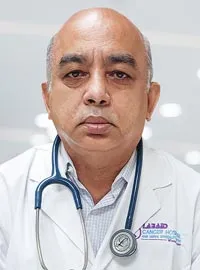
Prof. Dr. Md. Sirajul Islam

Dr. Md. Rafiquzzaman Khan

Dr. Abu Jafar Mohammed Saleh

Brig. Gen. Prof. Dr. Faruk Ahmed

Dr. Mirza Golam Sarwar Moon

Colonel Dr. Md. Mosleh Uddin

Prof. Dr. Md. Fakhruddin Bhuiyan
Preparing for Your Hematology Visit
The hematologist needs your blood's history, so bring it in order: every CBC report by date, iron and vitamin studies, hemoglobin electrophoresis, coagulation results, and transfusion records with dates and units. List medicines, iron and vitamin supplements, blood thinners, and herbal products — some alter counts significantly. Write a symptom timeline: when tiredness started, bleeding episodes, fevers, weight changes, lumps, or bone pain. For children, bring birth history, growth records, and vaccination cards, plus any family history of anemia, jaundice, or early deaths. If referred from another district to Dhaka, carry originals — photocopies blur the numbers the next team needs — along with your referral letter describing what has been done so far. Fasting is rarely needed; confirm at booking.
Questions Worth Asking Your Blood Specialist
Ask for clarity on: the exact diagnosis and the test that proved it; whether your anemia is microcytic (iron/thalassemia) or macrocytic (B12/folate) and what that implies; whether you or your partner need thalassemia screening; if a marrow examination is needed and where it is done; for transfusion-dependent disease, where safe blood comes from and how iron overload is tracked; for suspected malignancy, the referral destination and treatment plan — and whether transplantation is a consideration; and for clotting problems, the duration and monitoring of blood thinners. Finish with practicalities: follow-up intervals, which tests to repeat, and red-flag symptoms that warrant an earlier return.
Common Blood Disorders and How They Are Diagnosed
Iron deficiency — small red cells, low ferritin — is the commonest anemia and usually traces to blood loss or increased demand; it corrects with iron once the cause is managed. B12/folate deficiency shows large red cells with fatigue and neurological symptoms. Thalassemia minor (trait) is diagnosed by electrophoresis, needs no treatment, but is vital information for marriage and family planning. Thalassemia major appears in infancy and commits the child to lifelong transfusion. Sickle cell disease is uncommon in Bangladesh but seen. Aplastic anemia — empty marrow — is a hematologic emergency needing urgent referral. ITP and TTP affect platelets with bleeding risk. Hemophilia causes deep bleeds, typically in males. Acute leukemias present with fatigue, bleeding, and infections from marrow crowded out by blasts; chronic leukemias may be found incidentally. Lymphoma announces itself through persistent nodes. Myeloma affects older adults with bone pain and kidney strain. Each has a defining test — the hematologist's job is ordering the right one at the right time.
Treatment Approaches
Nutritional anemias respond gratifyingly to replacement therapy — iron, B12, folate — with counts recovering over weeks while the root cause is treated. Thalassemia major management is a long program: transfusions every few weeks, chelation to protect heart and liver, vaccinations, and monitoring for complications. Autoimmune blood disorders (ITP, autoimmune hemolytic anemia, Evans syndrome) start with steroids, moving to stronger immune suppression or spleen-directed options when needed. Aplastic anemia may receive immunosuppressive therapy or proceed to transplant workup — allogeneic transplantation for eligible patients is offered at a few Dhaka centers. Acute leukemias need urgent intensive chemotherapy in specialized units; chronic leukemias often start with oral targeted drugs; lymphomas get chemo-immunotherapy with high cure rates in many subtypes; myeloma uses combination regimens, with autologous transplant considered for eligible patients. Supportive care — safe transfusion, infection prevention, growth factors — runs alongside. Always ask where each phase happens and what it costs, since public and private pathways differ.
Frequently Asked Questions
Where in Dhaka can I get a bone marrow transplant?
Transplantation is offered at a few Dhaka centers, and only for selected conditions — high-risk leukemias, marrow failure, thalassemia major, and relapsed lymphomas. Ask your hematologist whether you are a candidate and for a referral to a transplant unit; the evaluation process itself takes weeks.
How do I choose a hematologist in Dhaka?
Match the doctor to your condition: general hematologists for anemias and platelet disorders, hematology-oncology specialists for blood cancers, and transplant physicians for transplant evaluation. Ask your referring doctor who specializes in your diagnosis, and confirm the hospital's appointment process before traveling across the city.
What does a bone marrow test involve?
A needle sample of marrow, usually from the hip bone, under local anesthesia — brief pressure, minimal pain, about 20 minutes. It diagnoses leukemia, aplastic anemia, myeloma, and unexplained cytopenias, and is done at tertiary hospitals with hematopathology support.
How is thalassemia trait different from thalassemia major?
Trait (minor) means carrying one faulty gene — mild or no anemia, no treatment needed, but important for family planning. Major means two faulty genes — severe anemia from infancy requiring lifelong transfusion. Electrophoresis distinguishes them; ask your doctor about screening if thalassemia runs in your family.
Is long-term blood thinner use safe?
When monitored properly — INR for warfarin, renal checks for newer agents — anticoagulation is safe and prevents strokes and recurrent clots. The risk is bleeding, so report unusual bruising or bleeding promptly. Ask your doctor how often monitoring is needed and what interacts with your dose.
How often do thalassemia major patients need transfusion?
Typically every 2–4 weeks, lifelong, with chelation therapy between. The schedule is set by the treating center based on hemoglobin levels and growth. Ask your doctor for referral to the nearest center running a regular thalassemia transfusion program.
Sponsor Space Available
Place your banner here to reach thousands of patients daily.
Grow Your Practice
Premium placement for hospitals & doctors.